“Focus on the process, not on profits,” says Umberto, Fintokei’s Italian Gold specialist
Watching a finance documentary and thinking you can trade? That’s the easy part. Actually building a method that survives six years of markets, psychology, and three Fintokei payouts, that’s a whole different game. Meet Umberto.
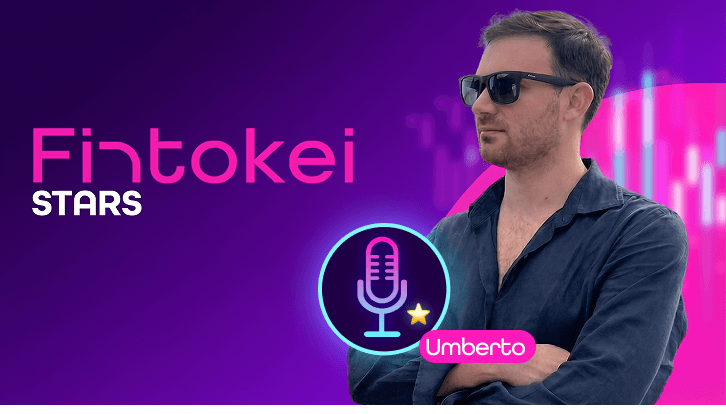
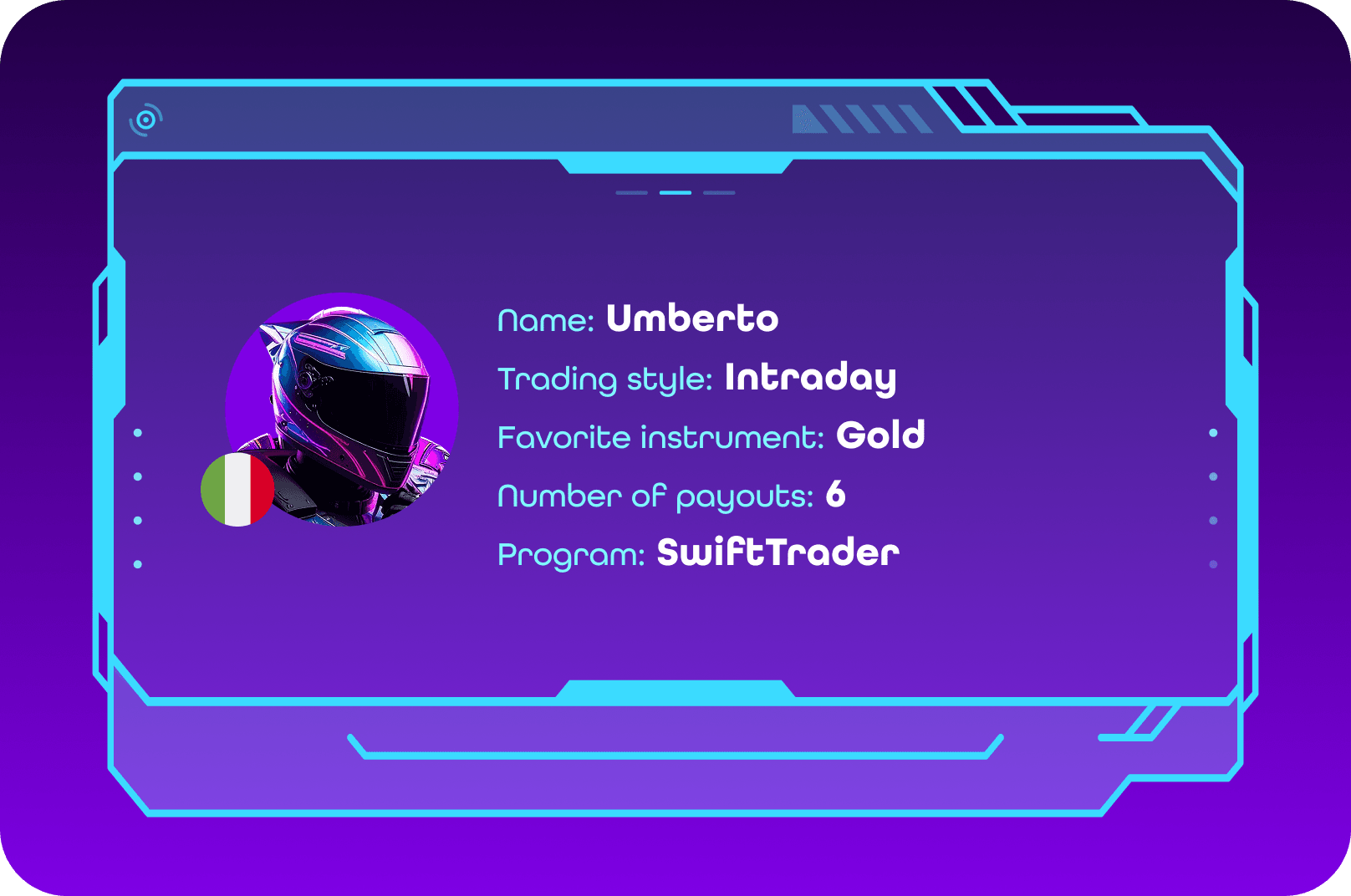
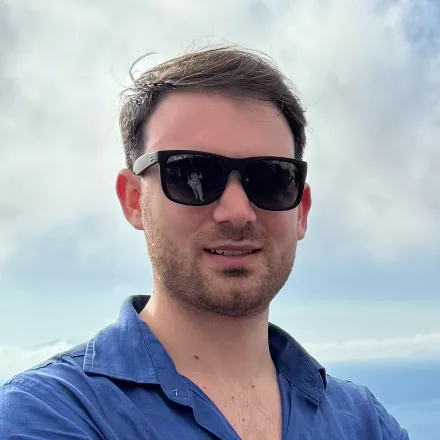
Meet Umberto, the Italian trader behind the Instagram handle @ITSTHEITALIANGUY, who turned early blowups into a disciplined, Gold-focused strategy and recently closed a single GOLD trade for $3,660 in profit.
“Trading is simple, but it’s not easy.”
Let’s start from the beginning. What pulled you into trading in the first place?
It was a mix of things, documentaries about brokers, finance films, that whole world. What really got me was the idea of direct control over my own financial future combined with a constant intellectual challenge. The adrenaline, the independence, the analytical thinking. I was hooked.
And your actual first trade, how did that go?
EUR/USD on a demo account. I knew absolutely nothing, no contracts, no analysis, no risk management. And somehow, that first trade was hugely profitable. Pure beginner’s luck. *(laughter)* Naturally, the very next trade ended in a total loss, interest included.
Ouch. But you didn’t quit.
No. Those early failures actually pushed me to study seriously, technical and fundamental analysis, trading psychology, and even pure economics texts. That’s when I truly fell in love with the field. And the lesson stuck: “Trading is simple, but it’s not easy.” Understanding the basics isn’t the hard part. The hard part is discipline, emotional control, and the patience to turn knowledge into consistent results.
Choose the platform that fits your trading DNA
We compared MetaTrader 5, cTrader and TradingView. What are their features, strengths and differences?
“Every day is a discovery: there is no single turning point.”
Six years in, full-time for three, that’s a proper career. Was there a moment where things clicked?
Honestly? No single moment. I know people expect some dramatic turning point story, but mine was just a continuous adaptation. In life, a turning point is winning the lottery; one event, and everything changes. In trading, every day is a discovery. You keep refining, learning, adjusting. That process is the real key to success.
What does your trading setup actually look like day-to-day?
I start every morning with a deep dive into global news and the economic calendar, especially high-impact events. Then I operate within very specific trading windows that I’ve identified over time as the most compatible with my style. During the session itself: maximum focus, alone, in complete silence. No music. I need full presence and real-time attention to market behavior. Distractions are a luxury I don’t afford.
No mentor, no guru. Just documentaries and books?
Pretty much. I’ve never had a direct mentor. I’ve learned a lot from watching professional traders on social media, YouTube, and podcasts, and then adapting what actually works to my personal style. Books on trading psychology and strategy are still part of my routine today.
“GOLD seems to move in one direction these days, and when you have a solid plan, even complex assets become readable.”
You’re known as a Gold specialist. How did that happen?
Four-plus years of trading GOLD. The volatility and dynamics of this asset allow me to fully apply my approach, combining technical analysis, patterns, and risk management. I also trade Forex and indices, but GOLD is where I’ve developed the most expertise. It’s where my edge is sharpest.
Tell us about your biggest Fintokei trade. The $3,660 one.
That trade was also my third payout, so it meant a lot. But what made it stand out wasn’t the size. It was how clean it was. The market had been under strong bearish pressure, and I deliberately avoided entering too early. I watched closely until the price stopped breaking new lows and started clearly rejecting the lower zone. That’s when I knew dynamics were shifting.
I identified a well-defined range, recognized a significant liquidity corridor above it with few technical obstacles, and when the price closed decisively above that range, I entered. I didn’t move my stop to breakeven immediately. I let the trade develop. Major macro news were approaching, and the broader fundamental context gave me extra confidence. Target was placed near Gold’s all-time high.
Three hours later, closed at the target. Zero improvisation. Pure process. As I often joke: GOLD seems to move in one direction these days *(laughter)*, and when you have a solid plan, even complex assets become readable.
You mentioned Japanese candlestick patterns, but you’re keeping those close to your chest?
😀Yes. They’re patterns I personally developed and refined over the years, not standard textbook formations. That’s the proprietary core of my approach, and I prefer to keep it that way.
A loss is not a mistake; it’s information. I analyze every stopped-out trade objectively: was there something to improve in execution, risk management, or trade construction? If yes, I adjust. Then I move forward without any emotional attachment.
“A loss is not a mistake by itself; it is simply part of the process.”
How do you handle the psychological pressure? Because this is where most traders fall apart.
Stress in trading is mostly driven by fear and insecurity. When you’re not truly confident in your process, or when you’re risking more than you should, every market fluctuation becomes a source of tension. But when you have full confidence in your method, apply proper risk, and your entry criteria are completely aligned, there’s simply nothing left to fear. You place the order and wait. The outcome, win or loss, is just one of the predefined scenarios.
Gotta say, that sounds almost zen. Was it always like that?
Not even close. 😀 The early years were tough. Especially emotionally. That was probably the hardest phase of my journey. I had to consciously build what I call an impenetrable mental framework. Today, I don’t fight emotions; I acknowledge them and keep them under control through a disciplined process.
And losses specifically. How do you process them now?
Years ago, every stop loss felt like a punch. I perceived it as a personal failure. Over time, I understood that the mindset was completely wrong. A loss is not a mistake; it’s information. I analyze every stopped-out trade objectively: was there something to improve in execution, risk management, or trade construction? If yes, I adjust. Then I move forward without any emotional attachment.
“Trading is not a fast way to make money – full stop.”
What’s the biggest myth you’d like to kill in the trading world?
That trading is a fast way to make money. Full stop. Real success comes from discipline, patience, continuous learning, and emotional control. There are no shortcuts. Anyone selling you a shortcut is selling you fiction.
Last one, best advice you ever received?
“Focus on the process, not on profits.” Consistent adherence to strategy and rules is what creates sustainable results over time. Emotionally driven decisions inevitably lead to losses. I live by that.
Umberto, thank you! This has been a masterclass in trading mindset. We’re rooting for payout number four.
Ready to try the best one-step prop challenge?
Start your SwiftTrader challenge today and trade toward your first payout.