Trade of the Month: Jan’s perfectly timed counter-trend Nasdaq short
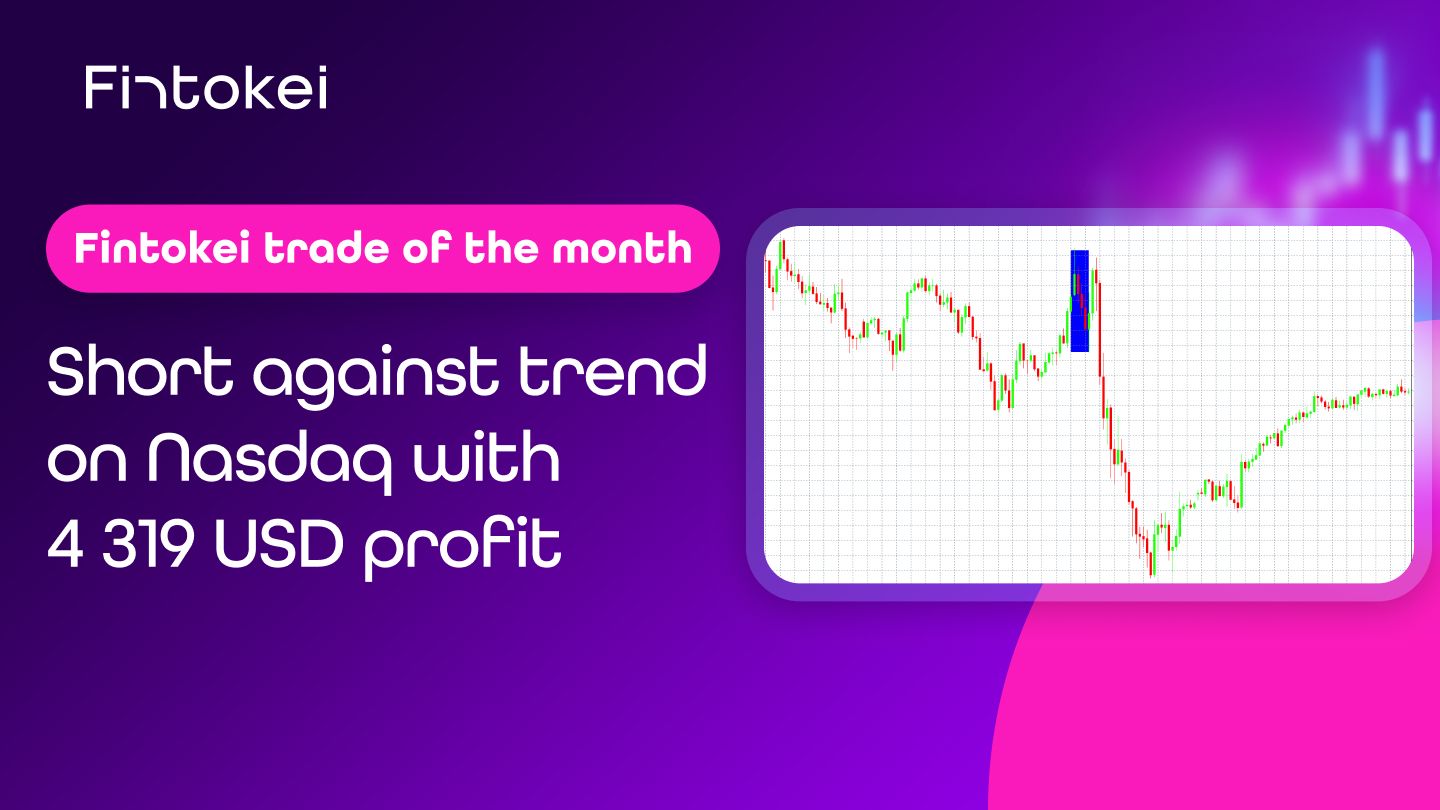
Going against a strong trend? That takes more than courage. In his latest trade, Jan took a short position against a rising Nasdaq and turned the short-term reversal into a $4,319 profit. Let’s break down what made the trade work.
Counter-trend trading is not about blindly guessing where the market will turn. Jan knew that. He waited for momentum to weaken, higher prices to be rejected, and sellers to start taking control.
Let's look at his entry, exit, and the wider market context. In other words, all the elements that turned this counter-trend risk into a profitable trade.
What happened before the entry?
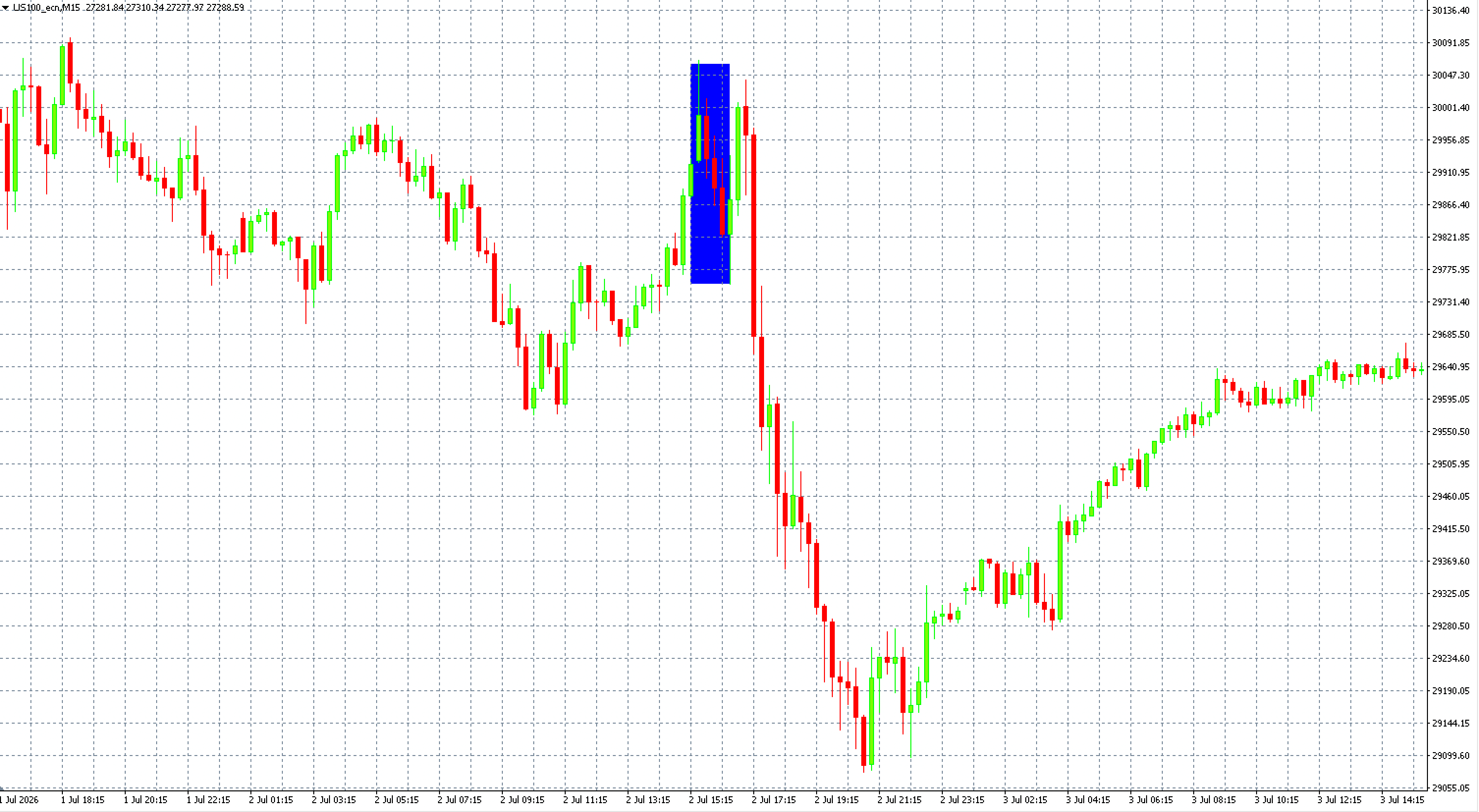
US100 had already made a strong move higher. Near the top, however, the buyers started running out of steam.
The price entered a distribution phase. Put simply, the market could no longer continue rising with the same confidence, and a battle over its next direction began near the top.
Jan could see several important signals:
- a failed attempt to set a new high,
- a potential local double top,
- long upper wicks,
- red candles following the rejection of higher prices,
- gradually weakening bullish momentum.
But the first hint of a reversal was not enough. Jan waited for the market to confirm that sellers were really taking control.
Entering the trade
Jan opened his SELL position only after the market confirmed the rejection of higher prices.
The price started forming lower highs before moving into a stronger decline. This confirmed that the previous upward move was losing strength. Jan was not trying to catch the exact top.
He waited for the chart to show a change in the short-term trend. He entered only after receiving clearer confirmation that sellers had taken the initiative.
Exiting the trade
Jan held the short position until the price reached an important support level.
That was where the first signs of stabilisation started to appear:
- green candles,
- slowing downward momentum,
- gradually rising lows,
- early signs of a possible bounce.
Jan closed the position before a stronger reversal could develop.
He did not try to squeeze every last point out of the move. He followed his target zone and protected the profit he had already made.
What was moving US stocks on July 2?
Jan did not enter the market at random. Technology stocks, which had previously climbed strongly, were starting to lose momentum. Weaker US labour market data also gave the Nasdaq another reason to fall.
Put simply, the mood around technology stocks was getting worse, creating a favourable environment for a short-term decline in US100.
The wider market context supported Jan's trade. But the main reason for his entry was still the technical setup on the chart.
Want to test a similar setup?
Do you have your own strategy for trading trend reversals? Test it in a Fintokei Challenge and find out how it performs in a simulated trading environment.
ProTrader Swing: the account Jan used
Jan opened his short on a ProTrader Swing account. It is designed for traders who want to hold positions longer, trade at their own pace, and avoid being pressured by a time limit.
Accounts from $5k to $200,000
Whether you are just getting started or want to trade with significantly more simulated capital, you can choose an account size that fits your approach.
Swap-free trading
You can hold positions overnight and over the weekend without paying swap fees. That means fees will not gradually eat into your longer-term positions.
No time limit
There is no fixed deadline for completing your Challenge. You can wait for a setup that genuinely matches your trading plan instead of forcing a trade just to beat the clock.
Volatility does not put your open positions at risk
The Daily Loss Limit is calculated from your account balance, not the current equity of your open positions. This means short-term price swings will not breach the limit while your trade remains open. What matters is the realised result once the position is closed.

What can you learn from Jan's trade?
1. A counter-trend trade needs confirmation
Jan did not enter simply because he thought the Nasdaq had risen too far.
He waited for specific signals:
- a failed breakout,
- long upper wicks,
- weakening momentum,
- lower highs,
- a series of red candles.
2. One red candle does not mean a reversal
Jan entered only after the market had confirmed a change in its short-term direction.
A single red candle may only represent a brief correction. Several signals appearing together can create a much stronger setup.
💡 Fintokei tip
How can you spot a trend reversal early? Learn how reversal chart patterns work.
3. The exit followed a clear plan
Jan was not aiming for a vague "maximum possible profit."
Before entering, he had already identified a support zone where closing the trade would make sense. When the first signs of stabilisation appeared there, he exited.
💡 Fintokei tip
Learn how to create a clear trading plan.
4. The market context supported the trade, but did not create it
Weaker labour market data and a rotation out of technology stocks helped the decline gain momentum.
However, Jan's entry was mainly based on the price chart. The wider market context provided extra confirmation, but it was not the only reason for the trade.
When does counter-trend trading make sense?
Trading against a strong trend is one of the riskier approaches.
A slowdown does not always mean a full reversal. It may only be a brief correction before the original trend continues.
That is why it is important to know the difference between a stronger setup and simply guessing the top.
| Stronger signal for a counter-trend short | Weaker signal / higher risk |
|---|---|
| Failed attempt to set a new high with long upper wicks | A single red candle without further confirmation |
| A series of lower highs confirmed across several candles | The market remains in a strong fundamental trend, for example after fresh earnings |
| Clear resistance where the market reacts | Entering in the middle of the chart without a clear target zone |
| A clear support zone for the planned exit | No plan for where to close the position |
Do you have a proven swing trading strategy?
Put it to the test with a ProTrader Swing challenge!

My job is to make sure everything works exactly as it should for our traders. After testing ProTrader Swing, I switch to real swings with kettlebells at the gym, or dive into digital illustration and video games to recharge. Favorite platform: cTrader. Favorite challenge: ProTrader Swing.