Order block trading: unlocking Smart Money Concepts (not only) in forex
In Smart Money-based trading, one term keeps popping up more and more: order block. And no wonder—it’s one of the most effective tools to understand how the big players move the market.
What is an order block and how to use it in trading?
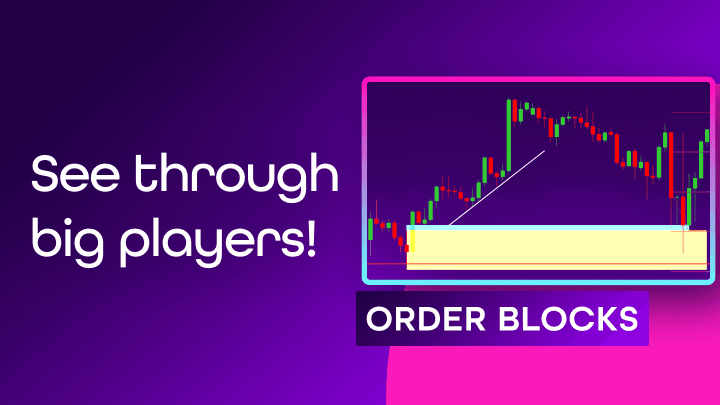
An order block is a zone on the chart where large institutions place massive orders, triggering a sharp price move and an imbalance between supply and demand. Spotting these zones and trading price returns into them is one of the core techniques in order block trading, and one you can use while working through a Fintokei challenge too.
How to spot Bullish vs. bearish order blocks?
- A bullish order block is the last bearish candle before a strong upward move. It signals buyers are stepping in with serious volume.
- A bearish order block, on the other hand, is the last bullish candle before price drops hard. It marks where aggressive sellers entered the game.
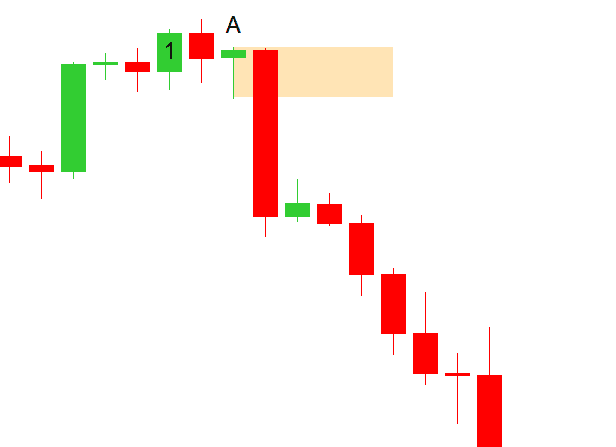
Both types are confirmed by a strong impulsive move that creates a Fair Value Gap—also known as a Fair Value Gap (FVG)—where price skips levels, leaving behind an imbalance.
Why do order blocks work?
If you're moving billions like institutions do, you can't just drop all your positions at once. You'd destroy the price and fill your orders at terrible levels. That's why big players break up their orders and execute them gradually. This staged execution often creates sideways movement—aka consolidation.
Once they're ready, they release a portion of their volume, creating an impulsive move. But here's the catch: not all orders get filled during that burst. That's why price often pulls back to the order block zone. The market wants balance—and that's where the fair value gap comes in.
Looking for a strategy to pass the challenge? Try Smart Money Concepts!
What makes an order block valid?
1) First, it needs to be the last opposite candle before the impulse
Or, depending on your approach, the one that's furthest in the opposite direction before the move. For a bullish order block, that's the lowest bearish candle. For a bearish one, it's the highest bullish candle.
2) Second, it must be confirmed by a Fair Value Gap
If there's no gap, there's probably no real imbalance—and you might be looking at a fakeout.
💡 TIP Fintokei
FVGs show up when three candles form a price gap—meaning the wick of the first and third candles don't overlap at all.
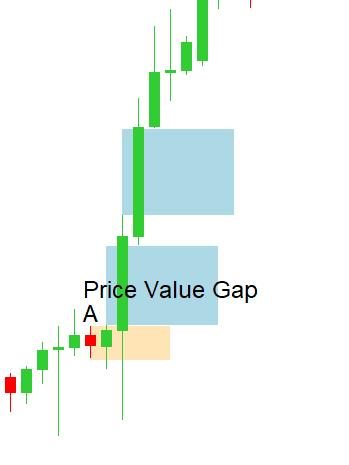
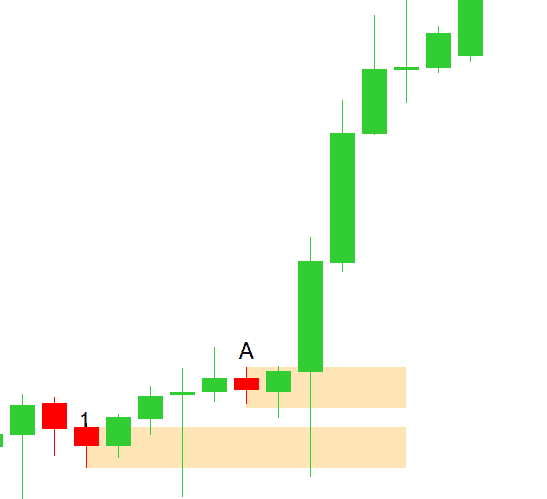
Another example? This time it's not a real order block. Why? Because the move is balanced, not impulsive.
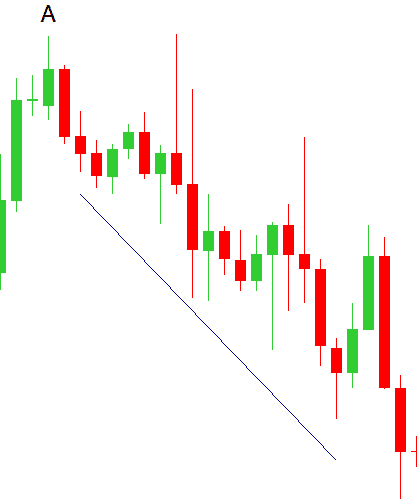
3) Must appear at a Break of Structure (BOS) or Change of Character (CHOCH)
These are the key signals of institutional activity. If the market's trending up, a BOS breaks a previous high, flipping resistance into support. If it's trending down, it breaks a previous low, flipping support into resistance.
CHOCH might sound funny, but don't take it lightly. It's a serious signal—usually showing a shift in market control. In an uptrend, it means breaking a higher low. In a downtrend, a lower high.
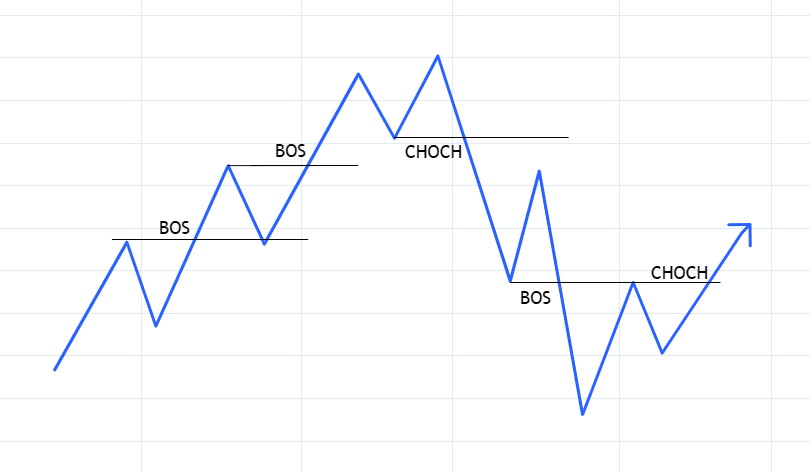
And don't forget: strong support or resistance zones in sideways markets on higher timeframes can also act as valid order blocks.
4) The breakout itself must be valid
Look for clean breaks with candle bodies, not just wicks.
Can you use order block trading on any kind of market?
Sure, no problem. Fintokei traders use order blocks on forex, gold, stocks, or even oil. The same goes for timeframes. From minutes to weeks, order blocks show up all over the place.
You can scalp with them, swing trade with them, or anything in between.
What's more, you can combine order blocks with other forms of technical analysis—like trendlines, moving averages, or candlestick patterns. Use them to confirm your entry, or even plan your stop-loss and take profit order placement.
Curious what's inside?
Create a free account and explore the Fintokei zone — loyalty rewards, dashboards, refer a friend and more. No challenge required.
Real-world examples of order block trading
Theory is great—but let's look at what order block trading actually looks like on the charts.
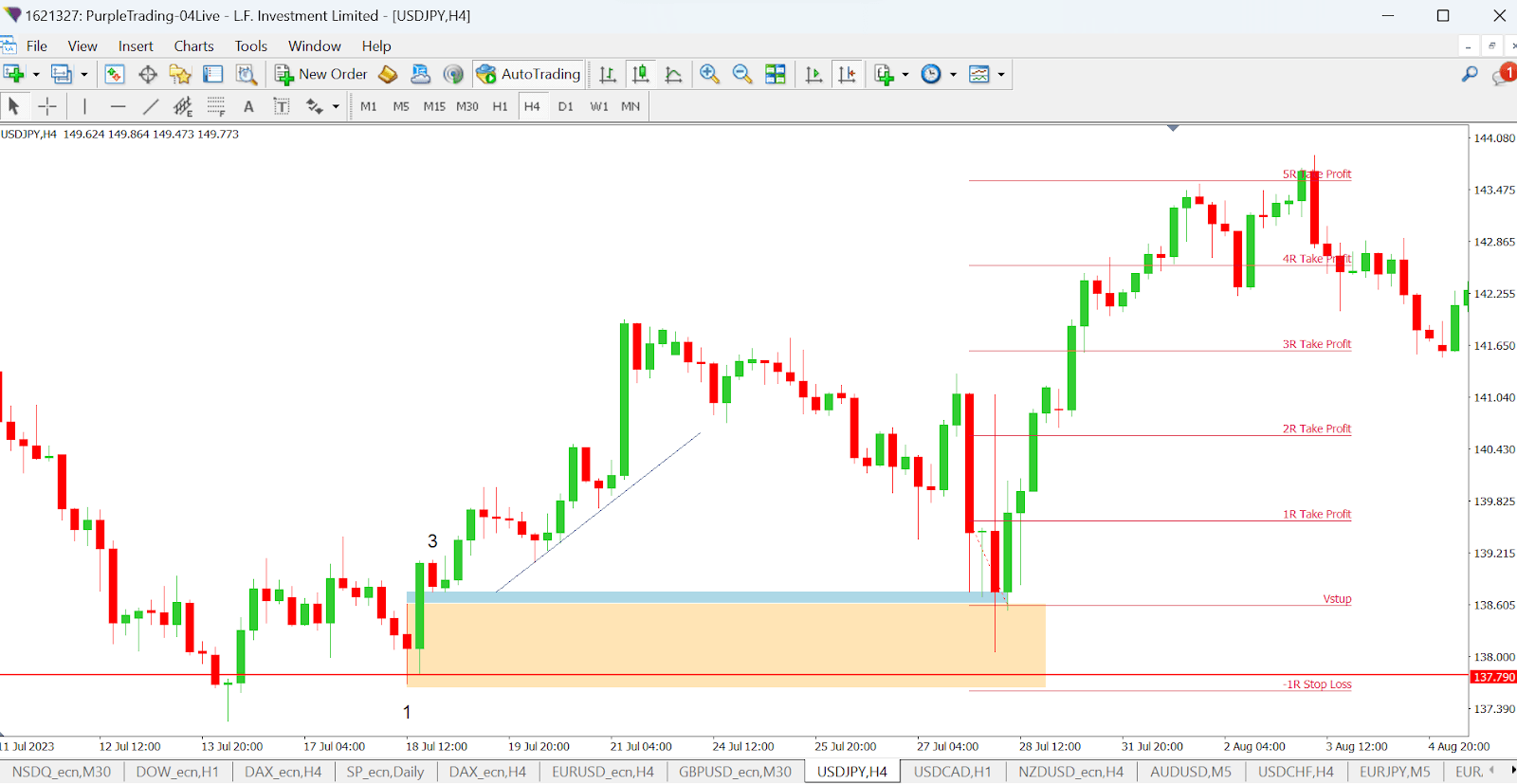
Here, you'll see a clear bullish order block at point 1. It's the last bearish candle before a strong upward move. Between candles 1 and 3, there's a Fair Value Gap, confirming a valid order block.
Once price returns to the zone, that's your long entry. Especially if the market structure supports an uptrend, this kind of setup offers great risk/reward.
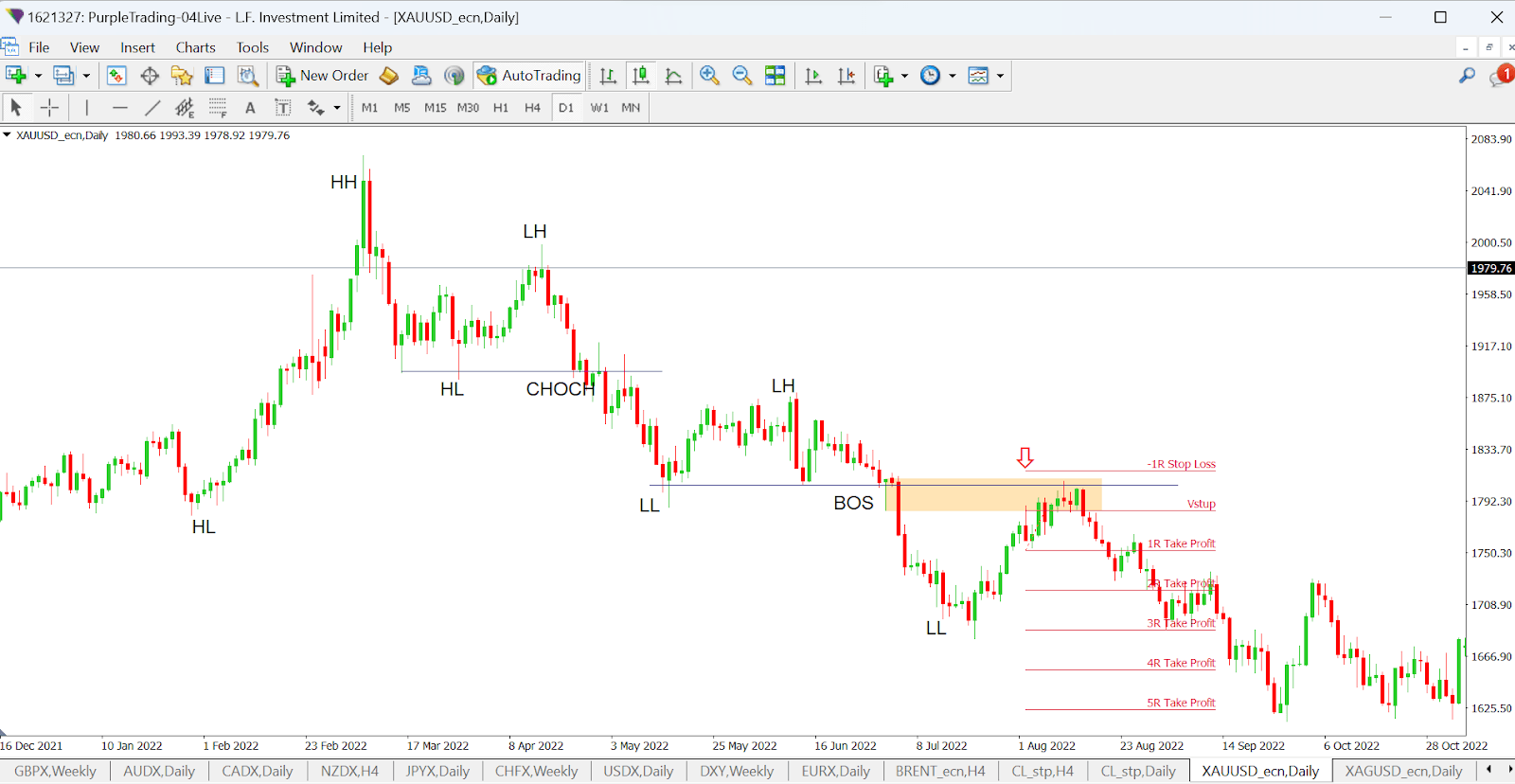
Bearish order block on Gold (D1)
Gold forms a lower low (LL) and lower high (LH), followed by a break of structure. There's a fair value gap and a bearish OB—the last bullish candle before the drop. Price later retraces to the forex order block, offering a short with potential 3R return, targeting the previous low.
💡 TIP Fintokei
Heads-up: In this example, the entry came when price just tapped the order block. But the nearby FVG wasn't fully filled—making this a riskier setup. Gaps tend to get filled. Always consider that.
The ideal scenario? Wait for price to come back to the order block and fully fill the Fair Value Gap. Then switch to a lower timeframe—like from D1 to H4 or H1—and look for a confirmation pattern (engulfing, doji, pin bar, etc.).
That's when the market's showing you it's ready. And as this example shows, a patient entry can return nearly 6R—just by waiting for that gap to fill and respecting structure.
✅ 7 Tips for Effective Order Block Trading
- Analyze Higher Timeframes: To identify significant order blocks and key price levels.
- Focus on Untested Blocks: Fresh order blocks often offer better trading opportunities.
- Use Price Action Confirmation: Look for candlestick patterns like pin bars or engulfing candles near order blocks.
- Be Aware of Fundamental Events: News releases can impact the effectiveness of order blocks.
- Trade with the Trend: Aligning trades with the prevailing market trend increases success probability.
- Set Appropriate Stop-Loss Orders: Place stop-losses beyond the order block to account for potential volatility.
- Monitor Price Reaction: Observe how price behaves upon returning to the order block zone before making decisions.
Implementing these tips can enhance your order block trading strategy, aligning your trades with institutional movements.
Frequently asked questions
Is order block strategy suitable for passing a Fintokei trading challenge?
Yes, order block trading is one of the techniques you can use while working through a Fintokei challenge. It works on forex, gold, stocks, and commodities, and can be combined with other approaches too. As with any strategy though, even the best order block setup won't help without solid risk management.
How is order block trading different from Smart Money Concepts in general?
An order block is one specific tool within the broader Smart Money Concepts approach. While SMC looks at the market as a whole — through liquidity, market structure, and the behavior of big players — order blocks focus on the specific zones where institutions placed their orders. You can find more on SMC in the previous article in this series.
Does order block trading work on shorter timeframes / scalping?
Yes, order blocks can be used from one-minute charts all the way up to weekly ones. On lower timeframes (M1–M15) you'll find them in scalping, while on higher ones (H4, D1) they show up in swing trading. The principle stays the same — only the speed and frequency of trades change.
Does an order block always need to be confirmed by a Fair Value Gap?
Ideally, yes. A Fair Value Gap is the best confirmation that a move was genuinely impulsive rather than just regular consolidation. An order block without a Fair Value Gap can be a weaker signal, and it's usually better to give it less weight — or ignore it altogether.
How do I spot an invalid order block?
An invalid order block forms during an equilibrium move — meaning there's no impulsive price action and no Fair Value Gap. If a candle isn't followed by a strong price shift and there's no supply-demand imbalance, it's more likely noise than a genuine zone left behind by big players.
Unleash your trading potential on Fintokei accounts too!

I make sure our support team is always there when traders need it. I trade too: sticking with a classic: EURUSD. I reset after both green and red days, either by keeping a steady breathing rhythm on a run or holding my breath over a historical novel in a café. Favorite platform: MetaTrader 5. Favorite challenge: SwiftTrader.